All Categories
Featured
All about How New Platforms Improving Bankruptcy Services
Not known Facts About How to Take Action with Your Payday...

Fascination About What to Watch For While Researching a H...

This Organization Philosophy with Individuals - Truths
Table of Contents
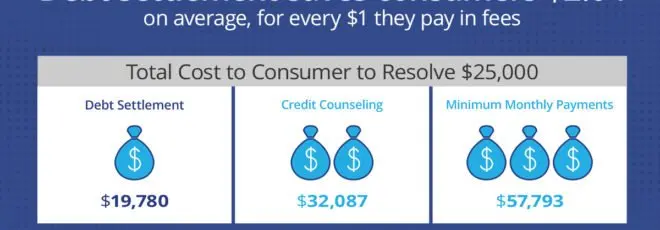
That maximizes cash in the short term, and you may have three to four years to save towards the negotiation quantity. Extremely unsafe to credit report, primarily because of missed out on payments and a negative "cleared up" mark that might stay on your debt report for as much as 7 yearsMay be just choice if various other alternatives (financial obligation loan consolidation, equilibrium transfer charge card, financial debt mercy) aren't possibleTypically requires a fee to the third event, which might balance out some or every one of the cost savings from debt settlementMay help you avoid bankruptcy if you've missed out on several paymentsNot all financial institutions collaborate with debt negotiation companies Financial obligation forgiveness might be right for you if you are experiencing a financial difficulty that makes it nearly difficult to pay down your debt balances.
With a DMP, you make one month-to-month settlement to the credit score therapy firm. Those funds are then distributed to creditors of your unsafe debts, such as charge card and installment financings. The firm collaborates with your lenders to minimize rate of interest or waive charges, but some creditors may decline such concessions.
A financial obligation consolidation loan combines your eligible debts right into one brand-new lending. It can aid you pay for financial obligation if you have the ability to safeguard a funding rate that's less than the ordinary rate of the accounts you're settling. You need to avoid from racking up financial debt on those freshly gotten rid of accounts or your financial debt can grow even higher.
These cards typically offer a 0% passion introductory period of approximately 21 months. That offers you a lot of time to get rid of or significantly lower your balance while making interest-free repayments. For some people dealing with insurmountable financial debt, bankruptcy might be the only means to quit collection process and legally settle their debts.
The Buzz on How Credit Counseling Services : APFSC Help for Debt Management Providers Help Clients to Achieve Credit Counseling Services : APFSC Help for Debt Management
You may need it if your financial institution or a collection firm ever attempts to accumulate on the financial debt in the future. When a lender forgives $600 or more, they are required to send you Form 1099-C.
Financial debt forgiveness or negotiation often hurts your debt. Anytime you resolve a financial obligation for less than you owe, it might look like "worked out" on your credit history record and impact your credit report rating for 7 years from the day of negotiation. Your credit history can also go down considerably in the months leading to the forgiveness if you drop behind on payments.
Indicators on Your Interests You Need To Know
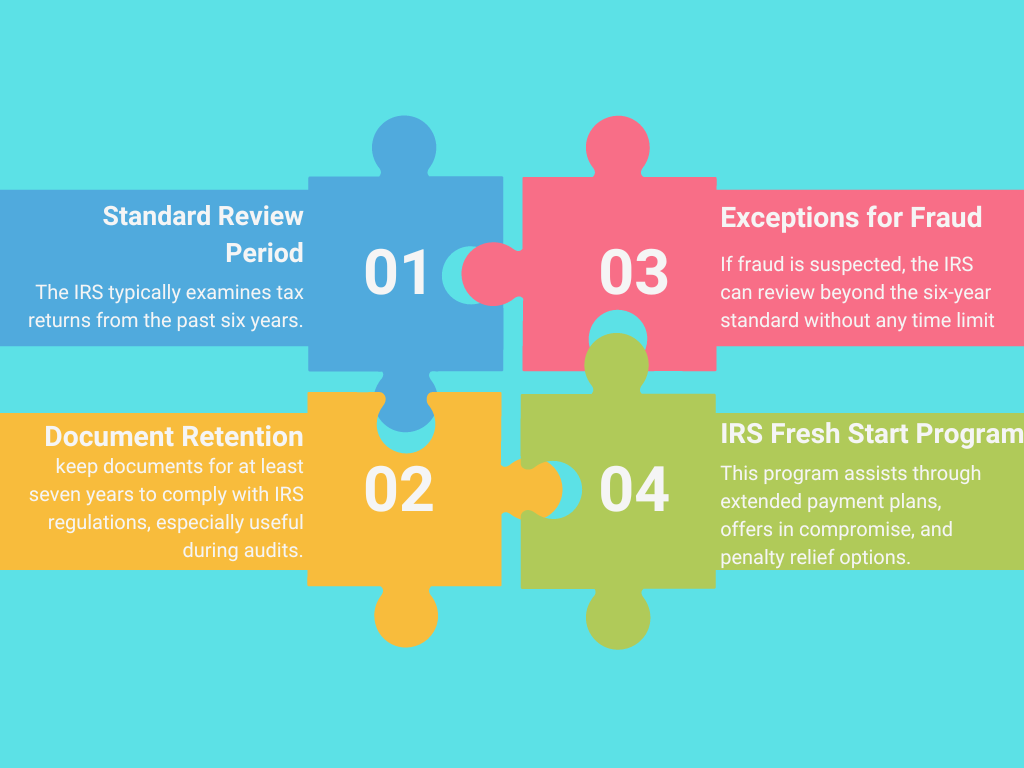
This circumstance commonly results from underreporting earnings, not submitting returns on time, or discrepancies found during an IRS audit. The repercussions of collecting tax obligation financial debt are serious and can include tax obligation liens, which provide the Internal revenue service a lawful claim to your home as safety and security for the financial debt.
Wages and Bank Accounts Internal revenue service can levy (take) earnings and bank accounts to satisfy the financial debt. Home Seizure In severe instances, the Internal revenue service can confiscate and sell residential property to cover the financial obligation.
Depression, stress and anxiety, and various other psychological health issues. Social Preconception Encountering lawful activity from the internal revenue service can lug social preconception. Damage to credibility and connections. Employment Opportunities A poor credit history because of tire debt can limit employment possibility. Difficulty finding or maintaining a job. Federal government Advantages Tax financial debt may influence eligibility for federal government advantages, such as Social Security and Medicaid.
The smart Trick of Local Resources That Offer Debt Relief That Nobody is Talking About
The OIC thinks about a number of elements, including the taxpayer's earnings, costs, property equity, and ability to pay. Successfully bargaining an OIC can be complicated, requiring an extensive understanding of the internal revenue service's guidelines and a strong argument for why your deal lines up with your capacity to pay. It is necessary to keep in mind that not all applications are approved, and the process needs thorough economic disclosure.
The internal revenue service assesses your total financial circumstance, including your revenue, expenses, possession equity, and capability to pay. You need to likewise be current with all filing and repayment needs and not remain in an open insolvency proceeding. The internal revenue service also considers your compliance background, assessing whether you have a record of timely filing and paying taxes in previous years.
How How Tech Improving Bankruptcy Services can Save You Time, Stress, and Money.
The application procedure for an Offer in Compromise involves several comprehensive steps. You must finish and send IRS Type 656, the Deal in Compromise application, and Type 433-A (OIC), a collection details statement for people. These kinds call for thorough financial information, including details about your earnings, financial obligations, expenditures, and possessions.
Back tax obligations, which are overdue taxes from previous years, can dramatically enhance your total internal revenue service financial debt if not attended to immediately. This debt can accumulate rate of interest and late settlement charges, making the original amount owed a lot bigger gradually. Failure to pay back tax obligations can result in the internal revenue service taking enforcement activities, such as providing a tax lien or levy against your building.
It is very important to resolve back tax obligations immediately, either by paying the total owed or by setting up a layaway plan with the IRS. By taking positive steps, you can avoid the accumulation of added rate of interest and charges, and avoid extra aggressive collection actions by the internal revenue service.
One usual reason is the belief that the taxpayer can pay the total either as a round figure or via a layaway plan. The internal revenue service also thinks about the taxpayer's income, costs, property equity, and future earning possibility. If these factors suggest that the taxpayer can manage to pay greater than the offered amount, the IRS is most likely to decline the deal.
Top Guidelines Of Staying Safe Against Bankruptcy Counseling Scams
It is vital to give precise and total details in your application and to seek advice from a tax obligation professional to enhance the chances of approval. Handling internal revenue service financial obligation can be complicated and daunting. Tax professionals, such as CPAs, tax obligation lawyers, or signed up agents, can supply vital assistance. They have the experience to browse the complexities of tax obligation legislation and internal revenue service procedures.

Table of Contents
Latest Posts

All about How New Platforms Improving Bankruptcy Services
Not known Facts About How to Take Action with Your Payday Loans vs. Debt Counseling: How to Break Free from the Payday Loan Cycle Process

About Is It Worthwhile vs DIY Approaches
More
Latest Posts
All about How New Platforms Improving Bankruptcy Services
About Is It Worthwhile vs DIY Approaches